Building Contractor in South Africa: Assessing the Right Fit
A polished quotation isn’t proof that a contractor is the right fit. Knowing how to choose a building contractor in South Africa means getting more than one written quotation and weighing the contractor’s B-BBEE status, relevant experience, specialisations and client references alongside the proposed work.
The decision should also account for how the work will be managed. A clear written agreement, agreed payment terms and a plan for reviewing completed work help set expectations before the project begins. If a dispute arises, the options may depend on the nature of the complaint and whether the contractor belongs to a building association.
This guide explains how to assess project experience and references, compare quotations and understand possible dispute routes. Use these checks to compare contractors on their ability to deliver the work you need, not just on the quoted amount.
Table of Contents
1. B-BBEE status
For home alterations, ask your local authority whether permission is required. Permanent structures generally require permission and plans. The applicable National Building Regulations and municipal approval process depend on the work and location. Settle the approval process before construction begins.
Treat B-BBEE status as one factor, not a measure of workmanship. It may matter when a project is subject to procurement requirements, funding conditions or an organisation’s policies. For a private home project, first consider whether any such requirements apply. Then weigh the contractor’s status alongside relevant experience, references and the written scope.
Ask the contractor for current evidence of its B-BBEE status and note the level shown. Check that the document names the business on the quotation, rather than a similarly named entity. If the contractor explains its status verbally, request supporting evidence before relying on the explanation. Keep the document with the quotation and project correspondence.
Check the date and details on the evidence. If it doesn’t clearly identify the business or its stated status, ask the contractor to explain any difference between the name on the document and the name on the agreement. Record the explanation in writing, especially when B-BBEE status is relevant to procurement requirements.
Don’t use a B-BBEE level as a shortcut for judging whether a contractor can deliver your specific project. A status document, for example, cannot show whether the team has completed comparable home alterations or can manage the building work you need. Assess each factor separately: combine relevant documentation with practical evidence of past work and clear project terms.
Before accepting a quotation, make sure the contractor understands the required work and any municipal approval steps already identified. Keep the B-BBEE evidence, plans, approvals and written agreement together. These records give both parties a clear reference if the scope or responsibilities need clarification later.
Required plans, municipal approvals and applicable National Building Regulations depend on the work and its location. Ask your local authority whether permission is required. Permanent structures generally need permission and plans, and the approval process should be settled before construction begins.
2. Checking references from previous clients
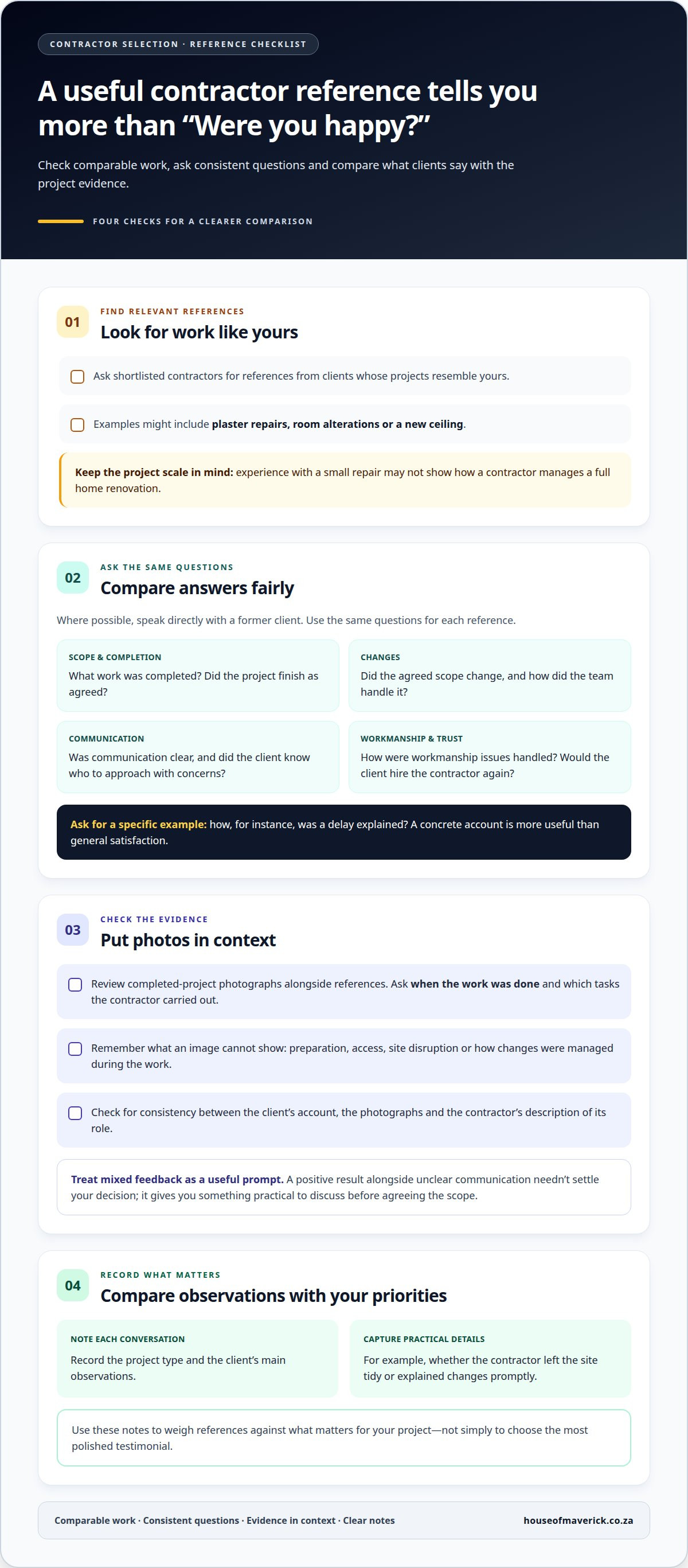
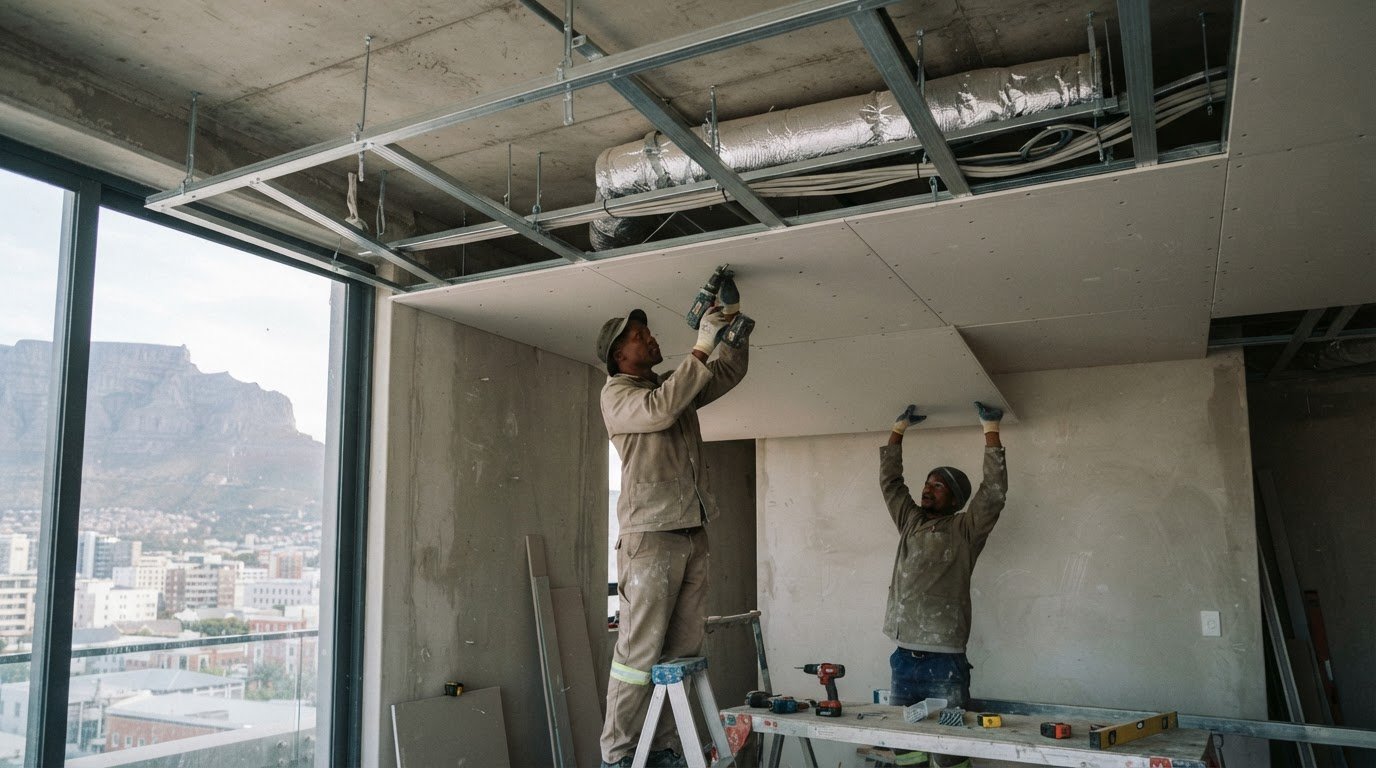
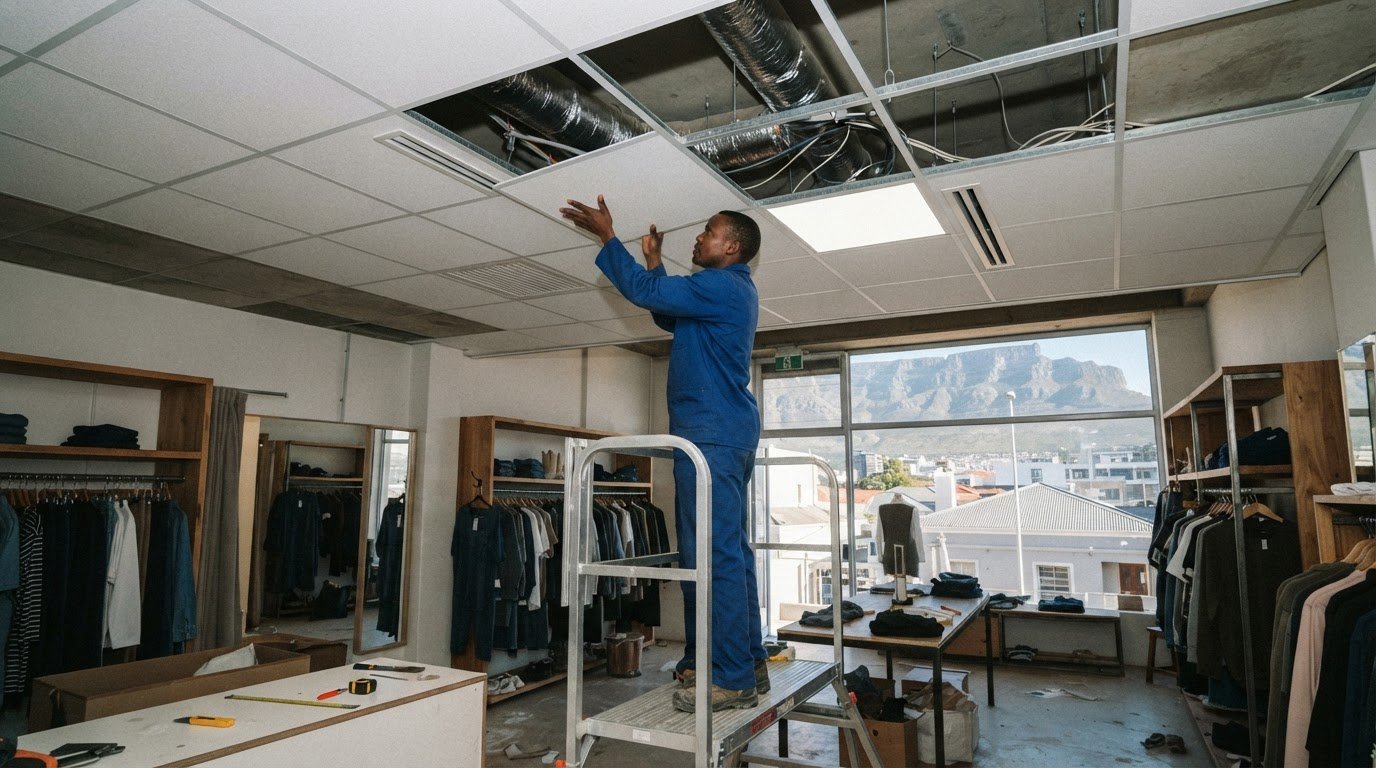
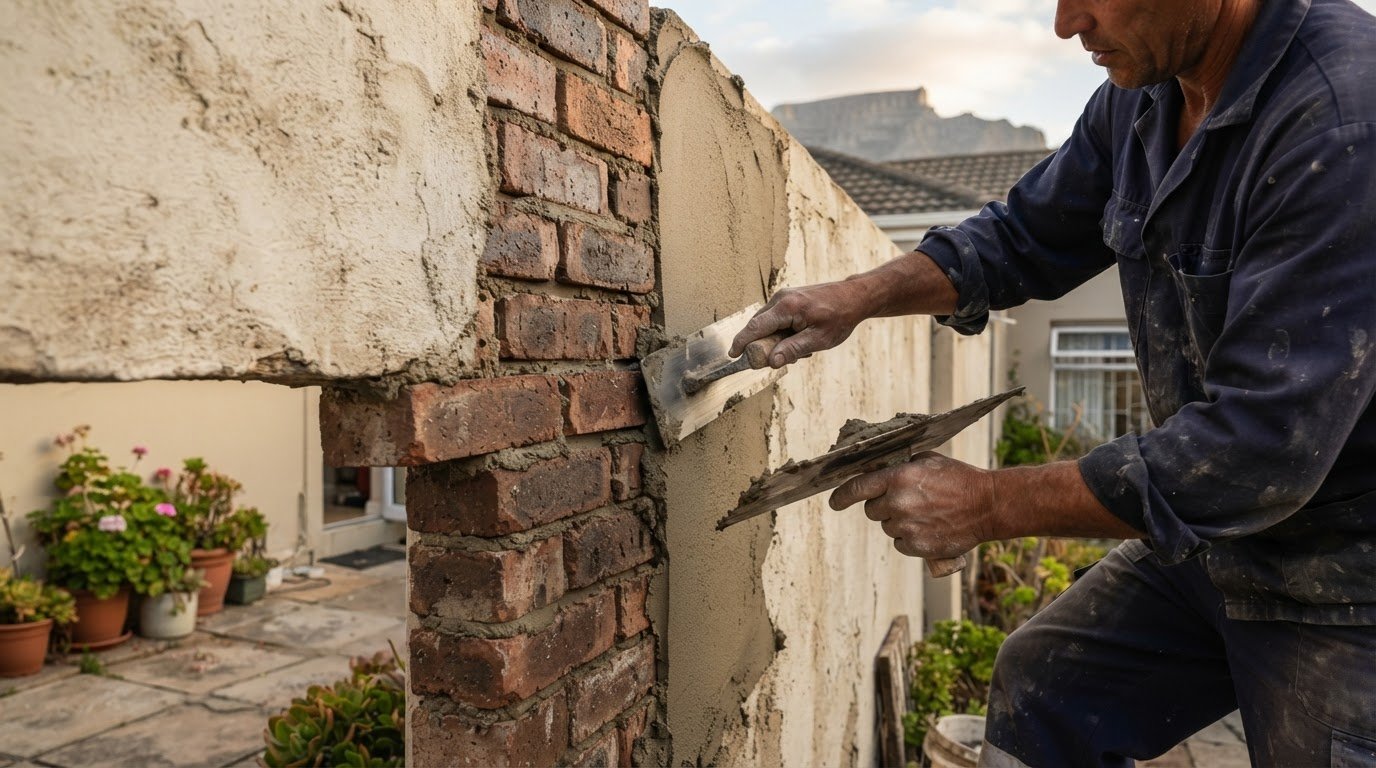
Ask each shortlisted contractor for references from clients whose projects resemble yours. A homeowner’s experience with a small repair may not show how a contractor manages a full home renovation. Request examples of comparable work, such as plaster repairs, room alterations or a new ceiling.
Where possible, speak directly with a former client rather than relying only on written testimonials. Ask what work the contractor completed, whether the agreed scope changed and how the team handled those changes. Find out whether communication was clear and whether the client knew who to approach with concerns.
Ask each reference the same questions so you can compare answers fairly. Was the project completed as agreed? How were workmanship issues handled? Would the client hire the contractor again? A specific example, such as how a delay was explained, is more useful than a general statement of satisfaction.
Review photographs of completed projects alongside the references. Ask when the work was done and which tasks the contractor carried out. A finished room may look sound in a photograph, but an image can’t show how the contractor managed preparation, access, site disruption or changes during the work.
Look for consistency between a reference’s account, the project images and the contractor’s description of its role. If a client praises the result but mentions unclear communication, consider whether that matters for your project. A mixed comment needn’t settle the decision, but it gives you a practical point to discuss before agreeing the scope.
Keep a brief record of each conversation, including the project type and the client’s main observations. Note, for example, whether the contractor left the site tidy or explained changes promptly. These details help you compare references against your priorities instead of choosing based on the most polished testimonial.
In South Africa, homeowners should ask their local authority whether alterations need permission. Permanent structures generally require permission and plans.
Check the contractor’s insurance cover and ask your own insurer whether your project is covered.
If the contractor isn’t a building-association member, homeowners can seek building-work dispute help from the Consumer Council or a consumer journalist. The Small Claims Court may be an option when the dispute involves a small amount.
3. Consumer Council and Small Claims Court options
If a building dispute develops, keep copies of the quotation, agreement, invoices, payment records, photographs and messages. These documents can show what work was agreed, what was paid and how the problem was raised. Dated photographs, for example, can record unfinished plasterwork or damage noticed during the project.
Raise the concern with the contractor in writing first. Describe the specific issue, refer to the agreed scope and state the resolution you want. Save the reply and any follow-up messages. A clear written record keeps discussions focused and supports the next step if direct communication doesn’t resolve the matter.
Homeowners can complain to a building association if the contractor is a member. The association may assist with mediation and dispute resolution when the parties can’t settle the matter themselves. This route depends on the contractor’s membership. Keep the membership details and complaint correspondence with your project records.
If the contractor isn’t a building-association member, homeowners can seek help from the Consumer Council or a consumer journalist. The Small Claims Court may be an option when the dispute involves a small amount. Gather the agreement, proof of payment and written complaint record so the issue and requested resolution are clear.
An unregistered or cash-only contractor can create practical difficulties if a dispute arises. Without a written agreement, invoice or traceable payment record, it may be harder to establish who accepted the work, what was promised and what money changed hands. If the contractor isn’t a building-association member, the association complaint route may also be unavailable.
Cash payment alone doesn’t prove poor workmanship, and registration status alone doesn’t establish work quality. Reduce uncertainty by recording the business name, scope, payment terms and project changes in writing. Keep receipts for cash payments and copies of all messages. These records provide clearer evidence if you need to make a complaint or seek assistance.
Keep copies of correspondence and relevant documents to support a building-work dispute. Storing them together makes the record easier to review when you seek assistance.
4. Contractor experience and service specialisations
Relevant experience means completed work that closely matches your project, not simply time spent in construction. A contractor who has completed room alterations may be a better fit for that scope than one whose experience is mainly in new builds. Ask what work the contractor managed personally and which tasks subcontractors completed.
In South Africa, obtain more than one written quotation. Compare the same scope across each document, including materials, preparation, exclusions, VAT and how changes will be handled. A lower total may omit work included in another quotation, so clarify the differences before comparing amounts. This is a practical step when choosing a building contractor in South Africa.
For NHBRC registration, request the contractor’s registration details and verify them through the NHBRC’s own channels. Ask whether the registration relates to the business named in your quotation and agreement. Keep the details with your project records.
Qualifications, licences and insurance depend on the work involved. Ask which qualifications or registrations apply to the specific tasks, and request details of the contractor’s insurance cover. Also ask your own insurer whether your home remains covered during the project.
Payment arrangements depend on the job and contract terms. A contractor may request a deposit, with later payments made in instalments or when work is complete. Avoid paying upfront before work has been carried out, and put each payment stage in writing.
A written building contract should set out the scope, responsibilities, payment stages, changes and how concerns will be handled. For substantial work, use a standard contract that clearly records both parties’ rights and obligations. Read it alongside the quotation, and don’t sign until the terms are firm and cover your requirements. A template can provide a starting structure, but the signed terms must reflect the actual project. When choosing a building contractor in South Africa, match the contractor’s experience to the work and make sure the written terms explain the arrangement.
For building work and plasterwork, discuss your project requirements.
House of Maverick: Building and plasterwork
House of Maverick undertakes building and plasterwork for home and commercial projects that need practical construction and finishing work. This may suit a defined scope such as repairing plasterwork or completing building work as part of a wider renovation.
For projects involving connected improvements, House of Maverick also provides Office Remodelling, Painting and Air-conditioning. A defined brief helps establish which work is needed and how the tasks relate, whether you’re updating a workspace or improving a home.
Share your project requirements and the work you’re considering. Contact House of Maverick to discuss your building and plasterwork project.
Move your project from planning to action
Before work begins, turn your priorities into a concise project brief. Describe the outcome you want, the areas involved and any constraints that could affect access or timing. Separate essential work from improvements that could wait, so the scope reflects what matters most. Note how you expect the finished space to function, not just how you want it to look.
When choosing a building contractor in South Africa, focus on fit. The working relationship should support the project’s requirements and provide a clear path from preparation to completion. With a defined scope, you can discuss the work and decide whether the proposed approach suits your plans. Keep decisions about changes or priorities clear as the project develops.
For building work, plasterwork or a wider property improvement, contact House of Maverick to discuss your project. A considered first conversation can help you set a confident next step.
Comments